





 Get access to over 1,300 articles and reader Q&As



Like all parents, I have a lot of experience with fever. My daughter had her first fever around 2 months, and 15 years later, I’m still sometimes greeted in the morning by a child asking me to “check their temperature.”
A fever is defined as a body temperature greater than 100.4 degrees Farenheidt (Carl Reinhold August Wunderlich, who died in 1877 and was credited for his measurements of human body temperature, decided this was the number that indicated a fever). For very small babies, fever is treated very seriously because of the increased risk of bacterial infection. But for children over 2 months, fever is more often an annoyance; it indicates illness, usually rules out going to school or child care, and makes your kid feel lousy.
Despite the agreement on what number indicates fever, there is more disagreement in how to deal with it. There are some people who fear fever in their children and treat any elevated temperature with medication. There are others who believe that treating fever is actively bad, that it prolongs illness, and shouldn’t be done.
Who is right? It turns out neither extreme is right; treating fever is often a good idea, but not always necessary. To see why, let’s go to the data.

Should I be scared of any fever? Can a fever be too high?
A fever is a body’s response to infection. It’s not perfectly understood why we have this response, but it is extremely common across animals, and generally, it seems like the higher temperatures slow bacteria and viral growth and activate different parts of the immune system. The important point underlying this is that the fever itself isn’t the issue; it’s the underlying cause that may be a problem. If, as is usually the case, the underlying cause is a childhood virus, we tend not to worry excessively.
Sometimes babies (again, over 3 months) and kids have really, really high fevers, and it can be kind of startling. My older kid, in particular, used to spike very high fevers, and I remember being quite alarmed when a temperature like 104.7° came up on the thermometer. However, a fever produced by illness in this way will not get too high for your child. And the fact that the fever is high isn’t necessarily a sign of a worse illness.
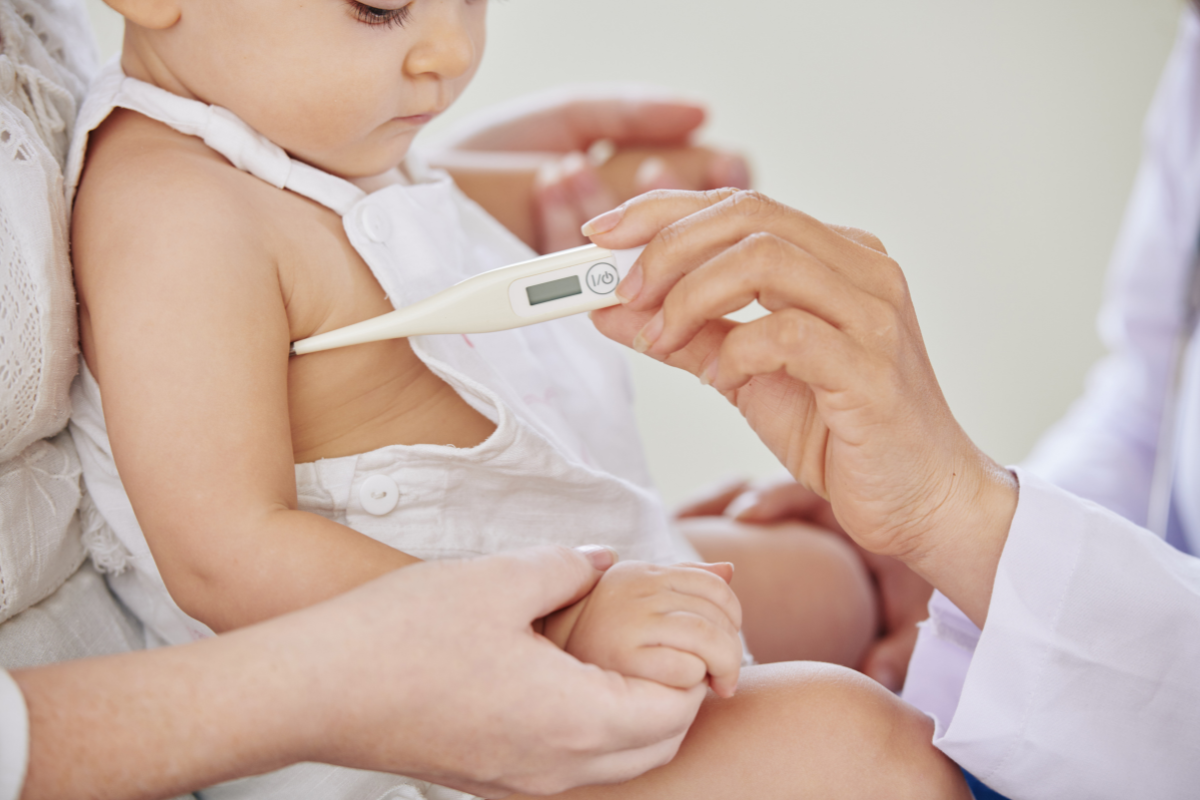
It also doesn’t really matter what type of thermometer you use. Ear thermometers, for example, often give different results in different ears. But that’s fine because it really doesn’t matter how high the fever is. By the time you are an experienced ill-child parent, you can also usually tell with the hand-on-the-forehead technique. I don’t want to brag, but the other day, I said “102” based on the forehead, and it was 101.9° in one ear and 102.1° in the other. Who needs technology when you have hands?
With a high fever, babies and children can develop a febrile seizure. These are uncommon but not rare (2% to 4% of children will get them). If this happens, you should call a doctor, but not panic.
Is it better not to treat it?
This is the most complicated question. From a logical standpoint, you can see why people ask it. I noted above that fever is a body’s response to infection, and we presume (because of evolution) that this is because fever is useful. Lowering body temperature might, therefore, make it harder to fight infection. But it is not obvious that this would be true, and our understanding of the mechanisms doesn’t tell us a full answer. It’s a question for data.
In general, the data suggests that treating fever doesn’t affect recovery in a positive or negative way. This has been best studied in critically ill patients. A well-known paper from 2015 showed in a randomized trial that outcomes were no different for critically ill (adult) patients whose fever was treated with acetaminophen versus not. They had the same mortality risk and the same time in the ICU.
There are some nice general summary papers (like this one) that pull together a lot of literature to suggest that treating fever doesn’t really have much impact in either direction on outcomes. In the specific case of childhood illness, a meta-analysis from 2013 argued a similar thing — treating fever doesn’t, on average, slow recovery.
Do I have to treat the fever?
Absolutely not. As noted above, the data suggests that treating a fever doesn’t improve outcomes. The only reason to treat it is so your child will feel better.
The pediatrician phrasing on this, which I like, is “Treat the child, not the fever.” A fever can make your child feel terrible, and treating it so they feel better and can have a better day may be a good idea. There is no reason not to. But if your child seems to basically feel okay, there is simply no need to treat the fever. (The same goes for you, by the way.)
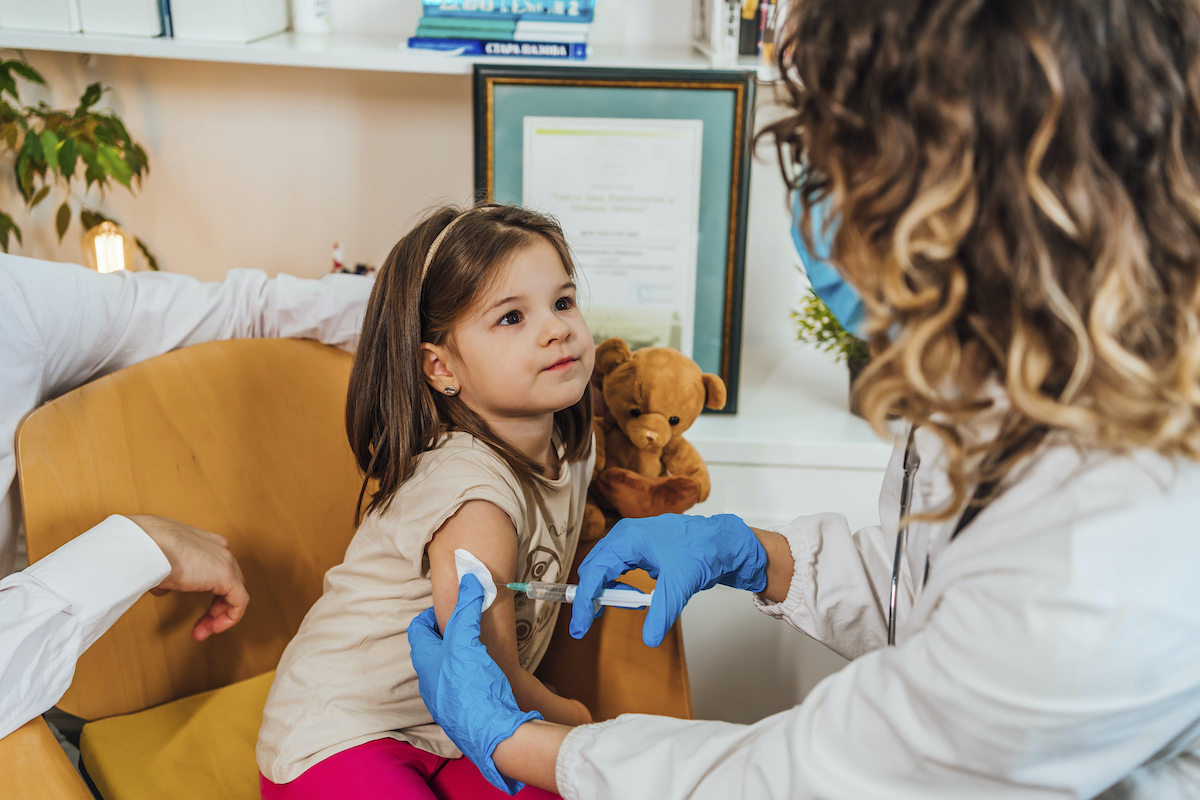
A corollary to this is, again, you do not need to worry too much about their actual temperature or take it all the time. Think about the mood, not the fever. This same logic follows for treating babies for fever after vaccination. You do not need to dose your child with medication before they get vaccinated, but if they are feverish and fussy after, it’s a good idea to treat it.
Is ibuprofen or acetaminophen better?
For a baby under 6 months, acetaminophen (Tylenol) is the only recommended treatment. For older children, ibuprofen seems to work better for fever in randomized trials. But both work well, even for older children.
If not based on fever, when should I be worried?
How do you know if your child is sick enough to call the doctor or go to the ER? When do you worry? If not at a fever of 104.7°, when?
The answer, which is both frustrating when initially said and then makes a lot of sense when you experience it, is if they do not seem like themselves and seem really sick.
Sick kids sleep more, but they will wake up if you wake them. Similarly, they may be kind of whiny, but you can make them feel better. A sick child will be able to stay hydrated, even if they aren’t very interested in solid food. A sick baby will still want to nurse or take a bottle.
If a child is totally inconsolable or is very hard to wake up or hasn’t been peeing at all, this is when you worry. But you’d worry about this even if there was no fever.
The bottom line
- A fever is a body’s response to infection. The fever itself isn’t the issue; it’s the underlying cause that may be a problem.
- In general, data suggests that treating fever doesn’t affect recovery in a positive or negative way. The only reason to treat it is so your child will feel better — “Treat the child, not the fever” is a good rule of thumb. If you decide to treat it, you can use either ibuprofen or acetaminophen.
- If your child doesn’t seem like themselves or seems really sick (inconsolable, very hard to wake up, or hasn’t been peeing at all), then you should be more concerned and call your doctor.






Log in
Hi! Thanks for this, I was just looking for this information. I heard that the concern used to be that when the fever is too high then it denature proteins in the brain, causing brain damage. Is that even possible? Are there illnesses other than usual childhood infections that could cause that?
Our rules for medicating for fever are only to do it if the child is too uncomfortable to sleep, or if s/he has other concerning symptoms, like so hot he’s starting to shake. Our kids are 7 and 9 and we haven’t had to give tylenol for fever in over 5 years.
Also our philosophy for our 4 year old.
Thank you for this information. Came just in time for my child’s first fever.
Thank you for this! I’m so sick of doctor’s telling me not to treat a fever as a way to “speed the healing process” since it’s the body’s natural defense. I’ve not seen one study saying children get better faster when you let the fever “run it’s course”. I want my child to be comfortable! Lately though, this approach is also being advocated for stomach viruses. Basically saying the diarrhea and vomiting are good things and by stopping the body’s natural defense (i.e. diarrhea and vomiting) our children will stay sick longer. Are there any studies on that? Or is it just the same “logical” approach with no data to back it up?
How would you even stop vomiting and diarrhea in younger kids? They probably aren’t allowed to take Imodium or any anti-nausea meds yet until age around 12?